
KORG KRONOS3-61
32,700 SEK
Workstation Synth, 61 keys Natural touch semi-weighted action, 9 Synth engines, Optimized startup time, over 300 premium sound libraries.
- Secure payment by card
- E-mail us, we reply swiftly!
The item you want is out of stock? Contact us för availability.
- BrandKorg
Description
Article no.: 8010791
KORG KRONOS3-61 61-Key Workstation Synth
2025 sees the release of the highly anticipated third generation of the classic KRONOS.
With intuitive controls, over 300 premium sound libraries, and a range of exclusive features, the KRONOS3-61 sets a new standard for both stage and studio.
New Sounds
In addition to thousands of pre-installed sound programs and combinations, the KRONOS3 introduces an additional 256 exclusive programs. Among these are 128 brand new sounds, including an impressive Italian piano with outstanding transparency and resonance, as well as Tine EP I Early, a new authentic rendition of classic electric piano tones.
These are added to 128 well-selected sounds from the KRONOS Sound Libraries, developed in collaboration with world-leading sound designers. This makes KRONOS3 a workstation with an incredibly wide range of sounds, from timeless classics to modern hits.
Exclusive sounds and combinations
KRONOS3 comes with a host of iconic sounds:
KRS-08 Best of TRITON - 128 of the most sought-after sounds from one of the best-selling workstation synths ever
KRS-04 Pro Splits and Layers - Optimized split and layer settings for live performance
KRS-05 Ensemble Combinations - Ensemble sounds for wind, strings and synth
KRS-06 and KRS-06B CX-3 Signature Sounds - 256 premium CX-3 organ sounds, developed in collaboration with world-leading organists
Advanced control and intuitive interface
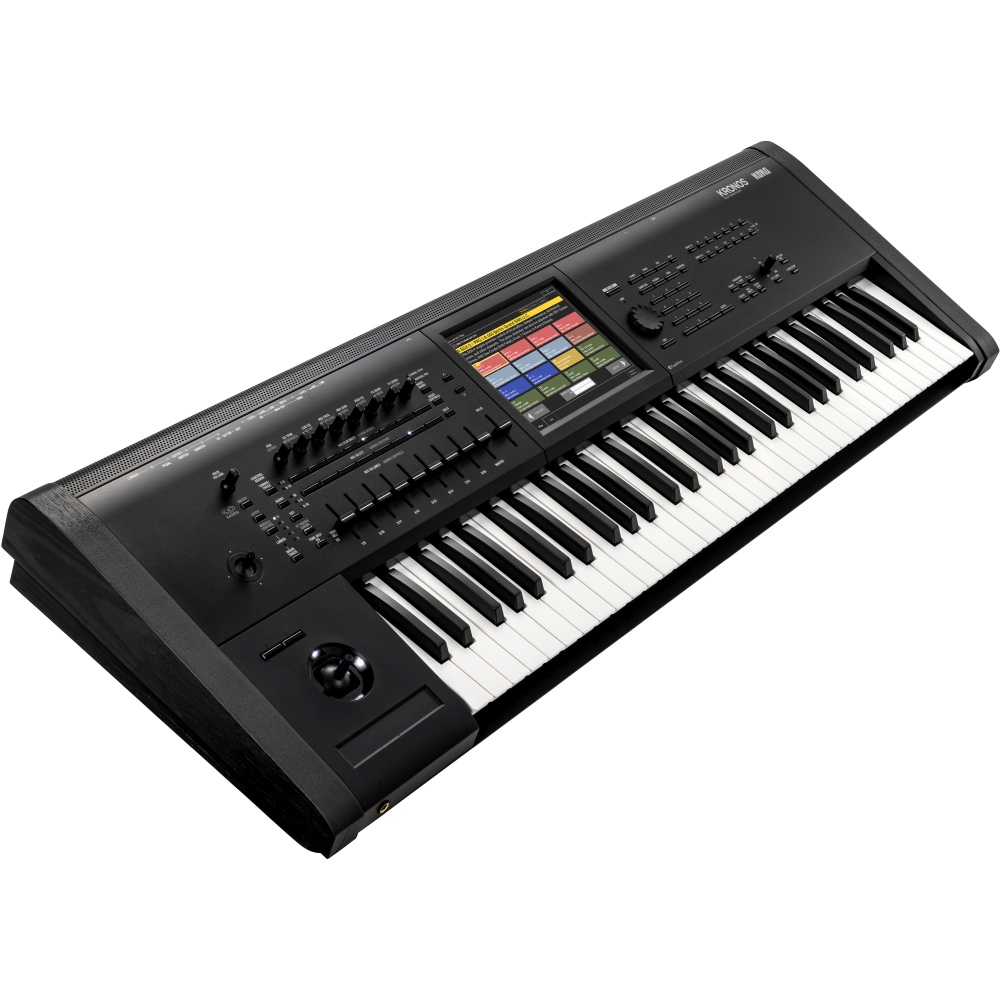
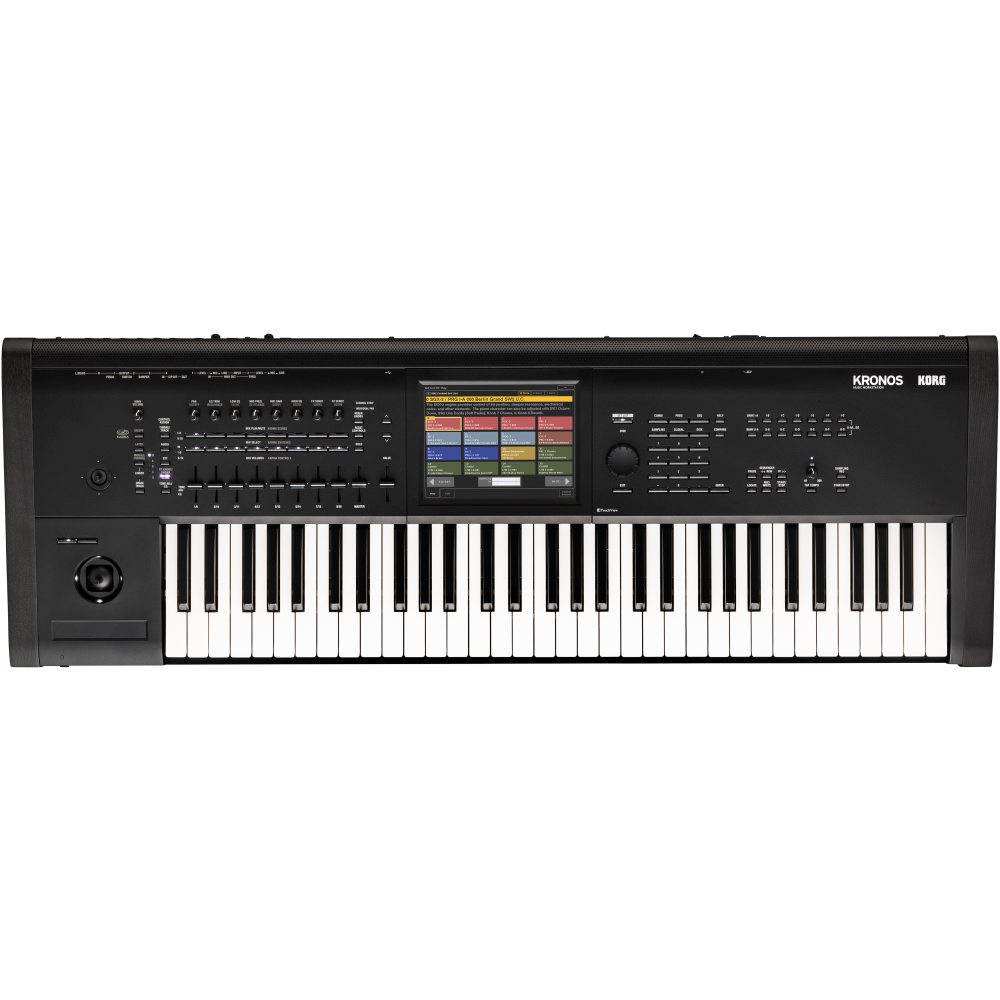
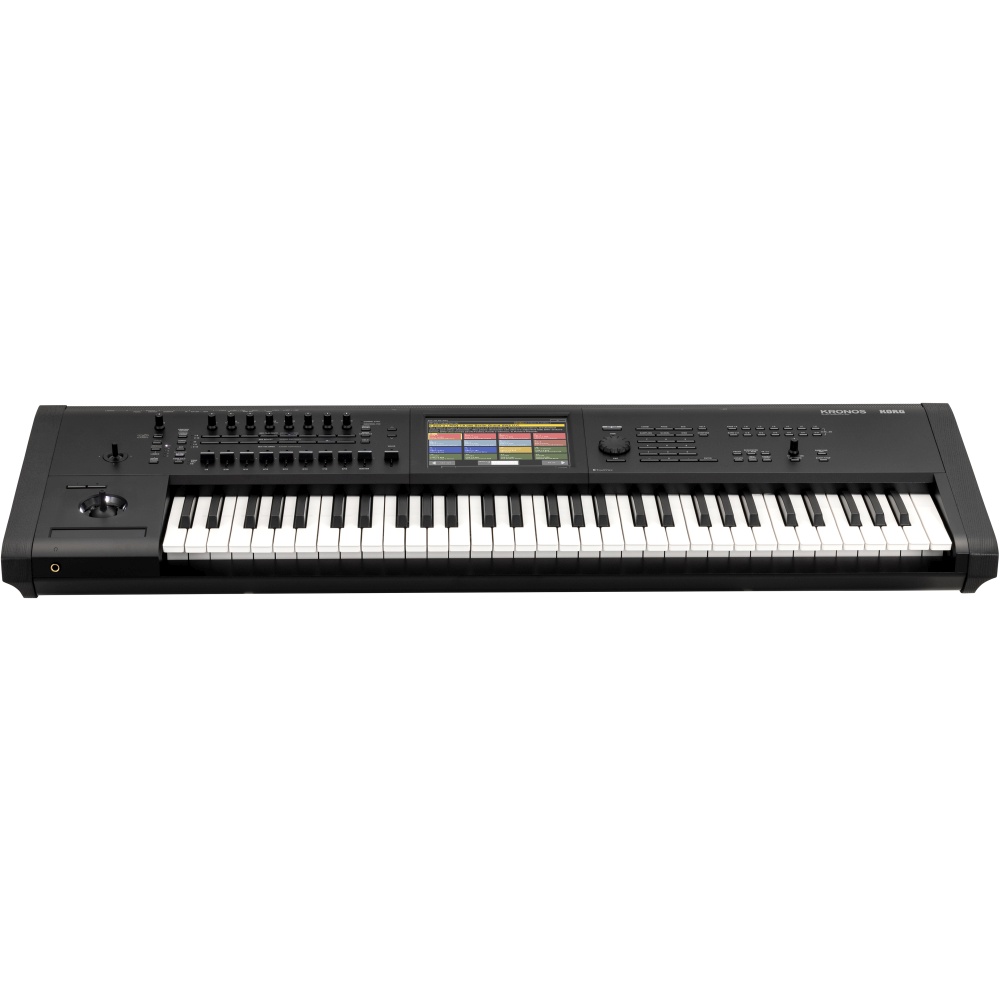
KRONOS3 features an enhanced layout with eight real-time sliders, nine sliders and a range of controls that make it easy to control sounds and parameters in real time. The responsive TouchView display is faster and more intuitive than ever, providing quick access to essential information.
Modern design and robust construction
KRONOS3 retains its classic features but now has a more elegant and robust design.
Powder-coated metal chassis for increased durability
Refined black wood panels provide a stylish and professional look.
Optimized
Start-up time is now 60% faster thanks to a redesigned system
Improved TouchView ensures instant response and smooth navigation.
Long-term compatibility and support
KRONOS3 is backward compatible with previous KRONOS models and the 300+ titles in the KRONOS Sound Libraries. This means you can continue using your existing sounds and easily upgrade as needed.
Specifications KRONOS 61:
Keyboard: 61 keys, (Natural touch semi-weighted action)
Synth engines:
- SGX-2: Premium Piano (acoustic piano)
- EP-1: MDS Electric Piano
- HD-1: High Definition PCM synthesis
- AL-1: Analog modeled synth
- CX-3: Tonewheel organ
- STR-1: Physics modeling for "pluck" instruments
- MOD-7: Waveshaping VPM synthesis
- MS-20EX: Component-modeled analog synth
- PolysixEX: Component-modeled analog synth (CMT)
Dimensions: (W x D x H) 1,064 × 363 × 134 mm
Weight: 14.2 kg
Connections:
- Headphone output
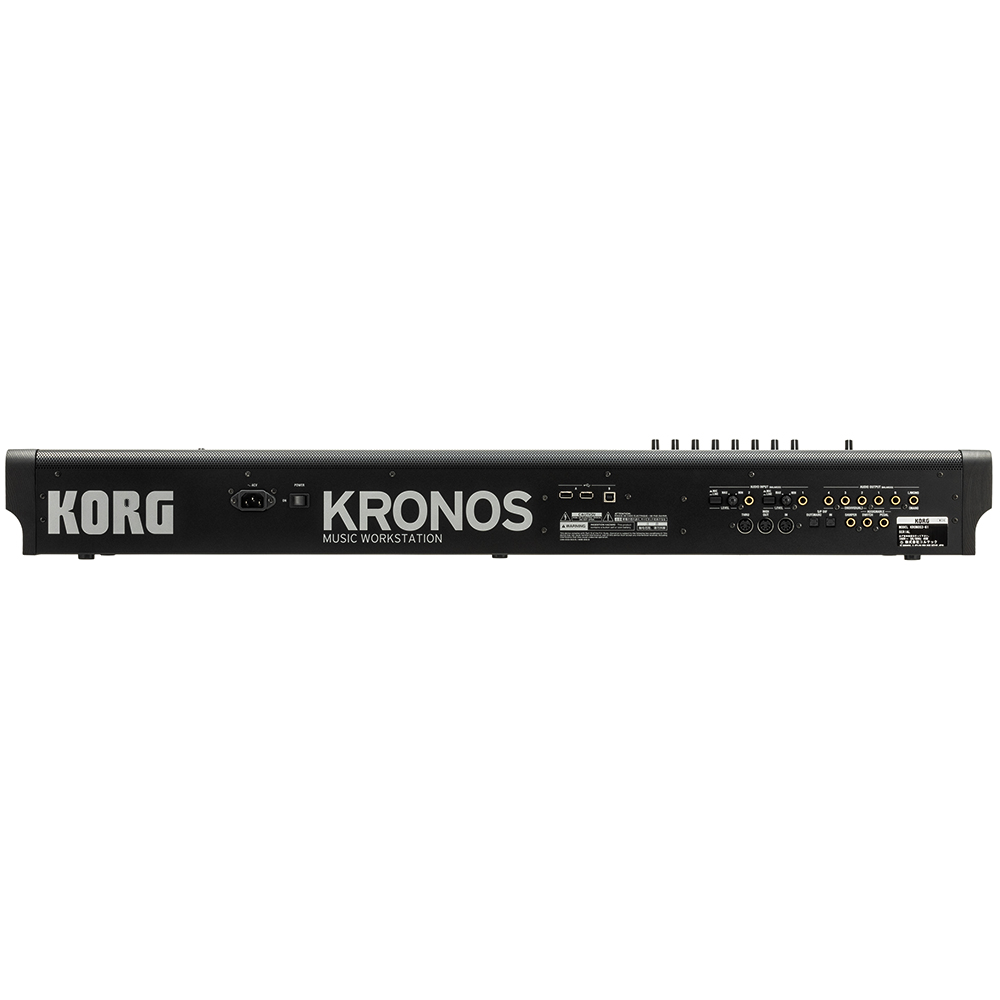
- L/MONO & R and 4 individual outputs (balanced 6.3 mm TRS)
- Audio in 1 and 2 (balanced 6.3 mm TRS)
- DAMPER input (6.3 mm, half-pedal support)
- MIDI IN/OUT/THRU
- USB-B for computer connection and audio
- S/P DIF input and output
Accessories: (sold separately)
- DS-1H damper pedal
- PS-1 pedal switch
KORG - Innovation since the 60s
Korg was founded in Japan in the early 60s by Tsutomu Katoh and his colleague Tadashi Osanai. The company was originally called Keio Electronic Laboratories and moved into its first premises in 1962. The name Keio was chosen because it contained the initials of both founders' surnames. It was also the name of the railway line that passed right outside the window of their workshop.
In 1963, Katoh and Osanai's first work, the Doncamatic DA-20, an electric rhythm box based on a rotary disk system, was introduced. The DA-20 was succeeded by the DA-11, an all-electronic DoncaMatic model.
A few years later, Katoh was approached by Fumio Mieda, an engineer who wanted to build a new type of organ. Unlike most organs of the time, Mieda's version was programmable. Although he used the word 'organ' himself, Mieda had in fact designed a synthesizer. Fifty copies were produced and sold under the new name Korg, which was a contraction of the names Keio and Organ.
During the 1970s, Korg developed a variety of synthesizer models such as the Mini Korg, PE-1000 Polyphonic Ensamble and MS-20. The company didn't limit itself to just synthesizers. 1975 saw the launch of the world's first pocket-sized tuner, the WT-10, a product that has since been followed by countless others.
In 1981 came the PolySix, a synthesizer that was unique in that it was programmable, polyphonic and (perhaps most importantly) so cheap that virtually anyone could afford to buy one. Another big step forward came in 1988 with the Korg M1, a synthesizer that featured realistic sample-based sounds, a drum machine, sequencer and digital effects unit, all combined in one instrument - the world's first workstation, in short.