
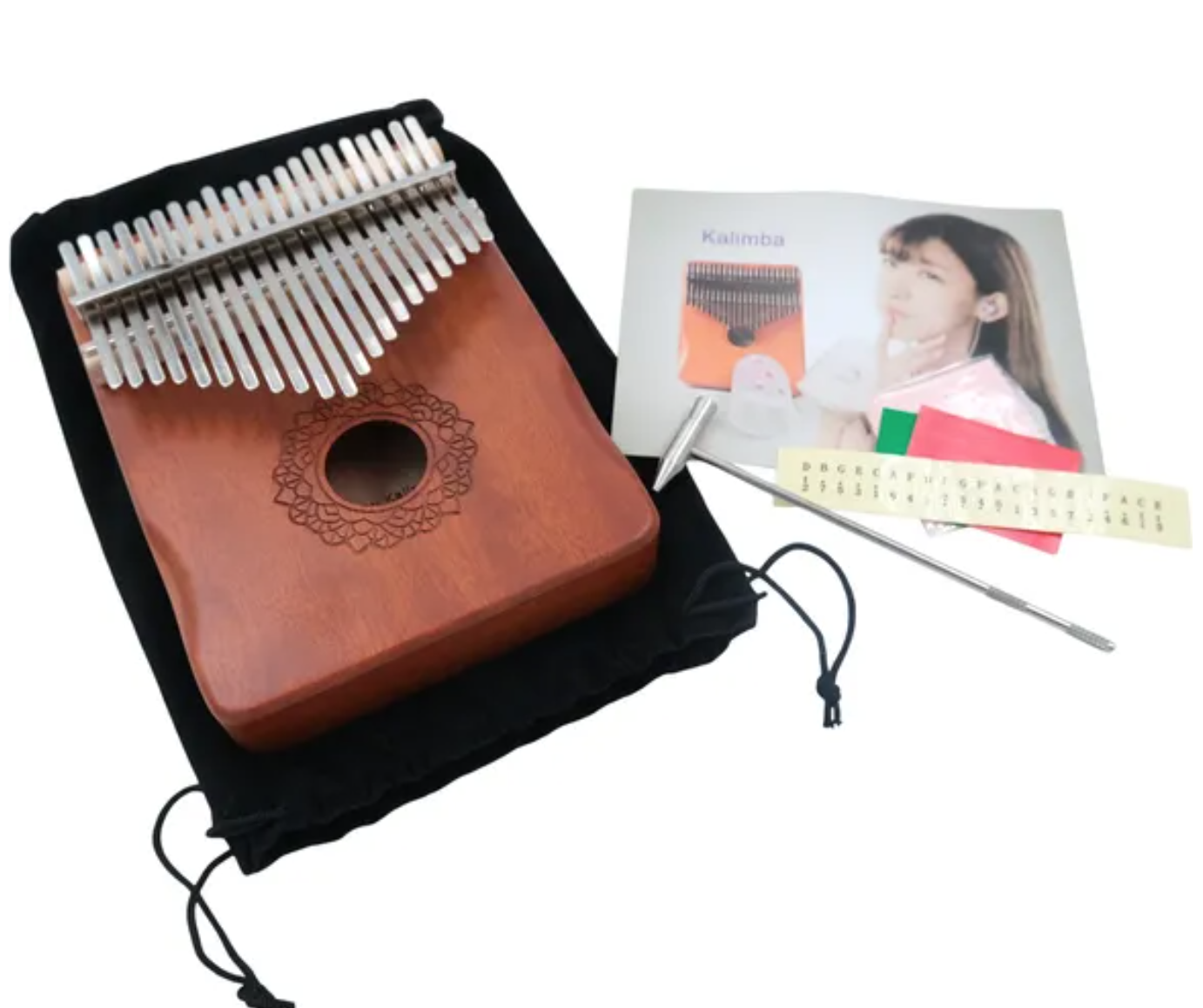
Shelter KLB21 kalimba
395 SEK
21-toners Kalimba
Lätt och roligt att spela på
Fantastisk för både barn och vuxna
- Betala säkert med kort
- Maila oss, vi svarar snabbt!
Finns inte varan du vill ha i lager? Kontakta oss för tillgänglighet.
- VarumärkeShelter
Beskrivning
Art.nr: SH-KLB-21
Very pleasant and soothing sound
Mahogany wood and mineral steel
Vibrato holes on the back
A Kalimba is also known as a tumpiano or lamellophone. It consists of a resonant body, which in this case is made of mahogany wood, to which 21 slats of mineral steel are attached at different lengths.
The kalimba is played by pressing down on the slats with your thumbs or fingernails and releasing them quickly. The slats then vibrate and produce notes of different pitches, depending on the length of the slats. On the back of the kalimba there are two holes that can be used for vibrato effects by covering them with your fingers and releasing them again repeatedly.
The kalimba originated in Africa and has been described and used for centuries in various African cultures. However, it has also become very popular worldwide in recent times, both as a folk music instrument and in modern music production.
It is characterized by its soft and soothing sound and is often considered a relaxing and therapeutic instrument to play and listen to. For many people, it has a direct stress-reducing effect and is an excellent tool for mindfulness and letting go of everyday worries. Moreover, it is easy to play while being light and comfortable to hold. Even people who don't normally play music will quickly appreciate the kalimba.
Because it's not very loud, it can easily fit into most people's evening moments in front of the TV, on the terrace or in the staff room on their lunch break, and you'll love being able to hear the quiet 'jingle' from the children's room.
The kalimban is ready to be taken out of the box and played, as it requires no preparation. And the only maintenance needed for a kalimba is if it rarely needs tuning. For this you need a tuning hammer, and if you don't have one, you can download a tuning app to your mobile phone, which in most cases is free.
A tuning hammer is included with this kalimba, which you can use to adjust the slats forward or backward when tuning it. This process is described in the accompanying guide (in English), where there are also some simple melodies for you to practice. Also included is a cloth bag to store the kalimba, as well as thumb guards that you can use while playing, if you find it more comfortable.
The 21 notes of this kalimba:
D6 - B6 - G5 - E5 - C5 - A4 - F4 - D4 - B3 - G3 - F3 - A3 - C4 - E4 - G4 - B4 - D5 - F5 - A5 - C6 - E6